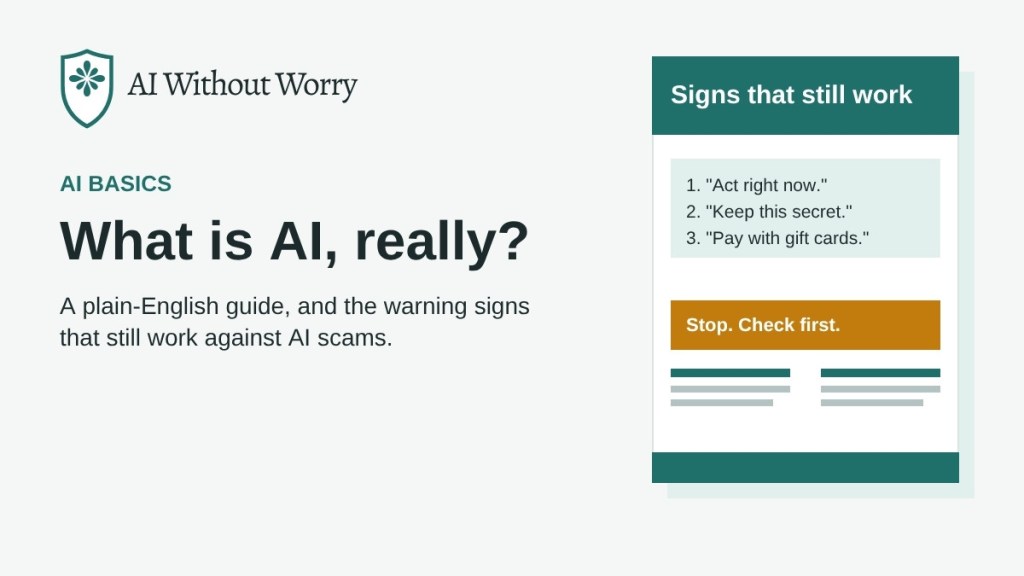
In short: Artificial intelligence, or AI, is software that learns from huge amounts of examples so it can write, answer questions and even copy a voice. It can be a helpful everyday tool, but scammers use it too. The good news is that the warning signs of a scam haven’t changed: pressure to act fast, a request for secrecy and an unusual way to pay.
Why everyone is talking about AI
You have probably heard about AI on the news, from your grandchildren or in an ad on your phone. Some stories make it sound like a miracle, while others make it sound frightening. Most of us are left wondering what it actually is and whether it has anything to do with our daily lives.
This guide explains AI in plain English. You don’t need any technical background to follow along. By the end, you’ll know what AI is, what it can and can’t do, why scammers have started using it, and the simple habits that keep you safe.
What AI is
AI is software that learns by studying enormous amounts of information, such as books, websites, photographs and recordings of people talking.
After all that practice, it can do things that used to need a person. It can write a letter, answer a question in plain language, create a picture or imitate the sound of someone’s voice.
Think of it like a very well-read assistant who has never actually lived in the world. It has seen countless examples of how people write and speak, so it is good at producing something that sounds right. However, it has no experience, no judgment and no way of knowing what is true unless someone checks.
Where you may already see AI
You may already use AI without realizing it. It helps power the voice assistant on many phones, the suggested words that appear when you type a text, and the filters that sort spam out of your email.
In the last few years, a newer kind of AI has become widely available. These are AI assistants, which are free websites and apps where you type a question and get a written answer back, almost like texting a knowledgeable friend. Well-known examples include ChatGPT, Google Gemini, Microsoft Copilot and Claude.
What AI isn’t
AI isn’t magic, and it isn’t a person. It doesn’t understand the world the way you do. Instead, it predicts which words or images should come next, based on the patterns it has learned.
That means it can sound completely confident and still be wrong. It can mix up dates, invent details or give outdated information without any warning. For anything important, especially health, money or legal questions, treat AI as a starting point and confirm the answer with a trusted source.
AI also isn’t something you are required to use. Many people find it helpful, and some decide it isn’t for them. Both choices are perfectly reasonable.
How AI can help in everyday life
Used carefully, AI can be a helpful everyday tool. Here are a few ways people use AI assistants:
- Explaining a confusing letter, bill or set of instructions in plain language
- Drafting a polite email, a thank-you note or a complaint letter
- Planning meals around what is already in the refrigerator
- Preparing a list of questions to bring to a doctor’s appointment
Treat the chat box like a conversation in a public place. Never type in your Social Security number, bank or card numbers, passwords or private medical details.
Why scammers like AI
Unfortunately, the same tools that help people write and create are also helping criminals. In December 2024, the FBI warned that scammers are using AI to:
- Imitate the voice of a loved one using only a short audio clip
- Write scam emails and text messages with far fewer spelling and grammar mistakes
- Create fake photographs and videos that look surprisingly realistic
- Build fake social media profiles and fake websites, sometimes with chatbots that talk with visitors
In other words, many familiar clues, like an odd accent or a message full of typos, aren’t as reliable as they used to be. A scam message today might look just as polished as a real one from your bank.
Three warning signs that still work
Here is the reassuring part: AI changes how a scam looks, but it rarely changes what a scam wants. Most scams still try to get you to do something quickly and quietly, before you have a chance to check.
Watch for these three warning signs, no matter how real a message looks or sounds:
- Pressure to act right away, before you have time to think or check the story.
- A request to keep the conversation a secret from your family or friends.
- A demand to pay with gift cards, wire transfers or cryptocurrency. The Federal Trade Commission (FTC) says these payments are very hard to get back once they are sent, which is why scammers prefer them.
What to do when something feels wrong
- Stop. You never have to make a decision on the spot.
- Hang up the phone or close the message without clicking anything.
- Contact the person or company yourself, using a phone number or website you already know is real.
- Talk it over with someone you trust before you send money or share personal information.
A real bank, government agency or family member will understand if you take a few minutes to make sure.
Questions people often ask
Do I need to buy anything to try AI?
No. Most well-known AI assistants have a free version you can use on a phone or computer. If you decide to try one, download it from your phone’s official app store or type the company’s web address yourself, rather than clicking an ad.
If AI can fake a voice, how can I trust any phone call?
You don’t have to judge the voice. Instead, hang up and call the person back on a number you already have, or ask for a family safe word that only your family knows. Those steps work no matter how real a voice sounds.
Is AI going to get better at fooling people?
The tools will keep improving, so it is wise not to rely on spotting mistakes. The habits in this guide don’t depend on how good the technology gets, which is why they are worth practicing now.
If you already sent money or information
- Contact your bank or card company right away and explain what happened. The sooner you act, the better your chances of stopping the payment.
- Report the scam to the FTC at ReportFraud.ftc.gov, and to the FBI at ic3.gov if it happened online.
- If you shared personal details, visit IdentityTheft.gov for a step-by-step recovery plan.
- Be wary of anyone who offers to get your money back for a fee. The FTC warns that these “recovery” offers are often a second scam aimed at people who have already lost money.
You did nothing wrong. These scams are designed to fool caring, careful people, and learning how they work is one of the best ways to protect yourself and the people you love.
Sources: FBI Internet Crime Complaint Center, public service announcement I-120324-PSA (December 3, 2024). Federal Trade Commission, “How To Avoid a Government Impersonation Scam” (consumer guide). Federal Trade Commission, consumer alert on recovery scams (August 3, 2026).
Get the free guide
Download our one-page guide, Is This Call Real?, and get a short scam alert every Tuesday.

